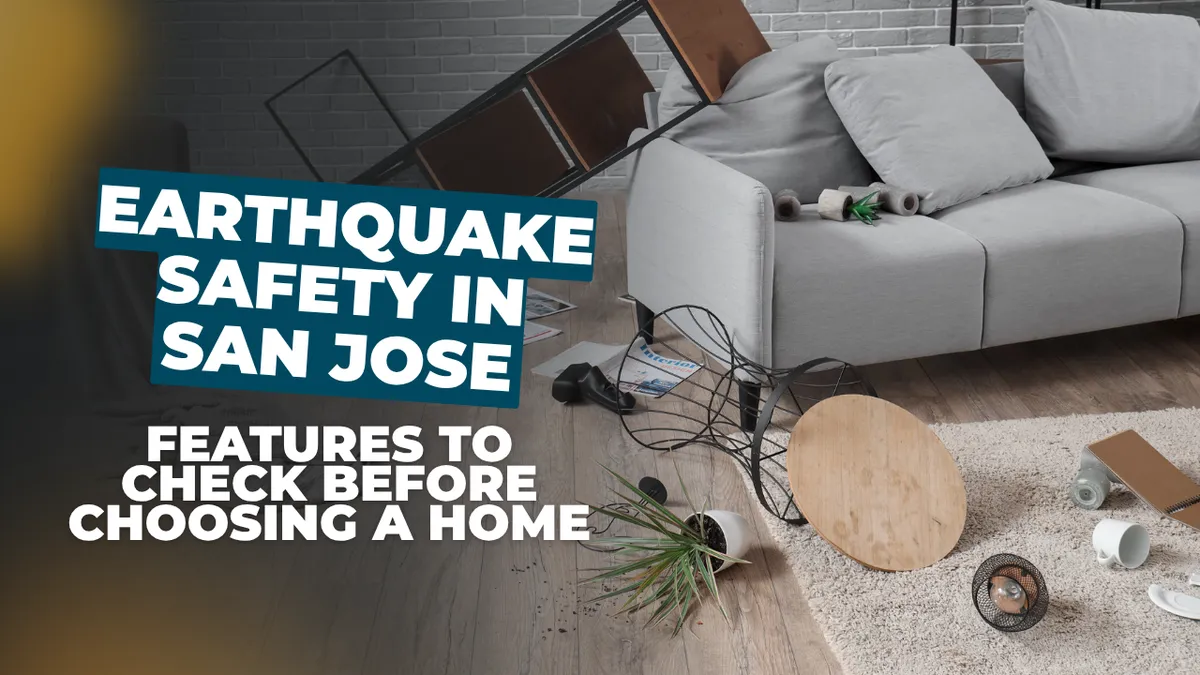
Earthquake Safety in San Jose
San Jose is located in an area where earthquakes are part of life. Many people love living here because of its weather, job opportunities, schools, and neighborhoods. But when choosing a home, buyers should also think about earthquake safety.
An earthquake can happen without warning. While no home can be guaranteed to survive every earthquake without damage, certain construction features and safety improvements may help reduce the risk.
If you are planning to buy a home in San Jose, take time to look beyond the kitchen, bedrooms, and backyard. The home's foundation, structure, and safety features are also important.
Here are some things to check before choosing your next home.
1. Learn About the Home's Age and Construction
The age of a home can give you an idea of what to look for during an inspection.
Older homes may have been built before some current earthquake safety practices became common. This does not mean every older home is unsafe. Some older properties have been properly updated, while some newer homes may still have construction or maintenance problems.
Ask when the home was built and whether major structural improvements have been completed.
You can also ask the seller for available building permits and records. These documents may show whether the home has received earthquake-related upgrades.
Pay attention to the home's construction type, too. Different materials and building designs may respond differently to ground movement.
A qualified home inspector can help identify visible concerns. If there are signs of structural problems, a licensed structural engineer may be able to provide a more detailed review.
2. Check the Foundation
The foundation supports the entire home. It is one of the most important areas to review when buying a property.
Look for visible cracks in the foundation, especially large cracks, cracks that appear to be growing, or areas where the foundation seems uneven.
You should also pay attention to other possible warning signs, such as:
Floors that slope or feel uneven
Doors that do not close properly
Windows that are difficult to open
Gaps around doors or windows
Cracks in walls or ceilings
Signs of water entering the crawl space or basement
These issues do not always mean the home has earthquake damage. Some may be related to normal settling, moisture, or other building concerns.
However, they are worth asking about. Do not try to decide whether a foundation problem is serious based only on how it looks.
If the inspector finds concerns, ask whether further evaluation is recommended.
3. Ask About Foundation Bolting
Some older homes in California have been updated with foundation bolting.
Foundation bolting connects the wooden frame of the home to its concrete foundation. This may help reduce the chance of the house sliding off the foundation during strong ground movement.
Ask the seller whether the home has been bolted and whether there are permits or records showing the work.
If the home has not been updated, ask a qualified contractor or structural engineer whether this improvement may be appropriate.
Foundation bolting is not a guarantee against earthquake damage. It is one part of a larger safety picture.
4. Look at the Crawl Space and Cripple Walls
Some homes have a crawl space between the ground and the first floor.
Inside this area, there may be short walls called cripple walls. These walls help support the structure above them.
In some older homes, these walls may need additional bracing. Proper bracing can help reduce movement during an earthquake.
If the property has a crawl space, ask whether it has been inspected.
A professional may look for weak framing, moisture, wood damage, missing connections, or other problems.
Do not enter a crawl space if it is unsafe or difficult to access. Let a qualified inspector handle the review.
5. Check the Water Heater
A water heater can become a safety concern if it tips over during an earthquake.
Ask whether the water heater is properly secured with approved straps or supports. California has requirements for water heater bracing in many situations.
Also check the general condition of the unit.
Look for signs of rust, leaks, damaged connections, or poor installation. Ask how old it is and whether it has been serviced.
A properly secured water heater may help reduce the risk of damage to the unit and its connections during ground movement.
6. Review Gas and Electrical Safety
Earthquakes can damage utility connections. Gas leaks can create a serious fire risk, so it is important to understand the home's gas system.
Ask whether the home has an automatic gas shutoff valve. These devices are designed to stop gas flow under certain conditions, depending on the type of valve and installation.
Have a qualified professional check the gas connections and other related equipment.
You should also review the electrical system. Ask about the condition of the electrical panel, wiring, and major connections.
If you notice exposed wiring, damaged outlets, or other electrical concerns, have them checked by a licensed electrician.
7. Understand the Property's Location
The location of a home can affect the type of earthquake-related risks buyers should consider.
Some areas may be closer to mapped fault zones. Other areas may have soil conditions that can increase certain risks during an earthquake.
Liquefaction is one example. It can happen when loose, water-filled soil loses strength during strong shaking. This may cause the ground to move or settle.
You can review available hazard information through official California and local government resources.
A property near a mapped fault or in an area with certain soil conditions is not automatically a bad choice. The important thing is to understand the risks and consider them as part of your decision.
8. Review the Inspection Report Carefully
A general home inspection can help you understand the property's visible condition.
However, a standard inspection is not the same as a full structural or seismic evaluation.
Read the report carefully and ask questions about anything you do not understand.
If the inspector identifies foundation movement, damaged framing, or other serious concerns, ask whether a specialist should review the home.
You may also want to request repair records, engineering reports, or permits from the seller.
Do not ignore a problem simply because the home looks attractive or is in a popular neighborhood.
9. Consider Earthquake Insurance
Many buyers assume that a standard homeowners insurance policy covers all types of damage. However, earthquake damage is generally excluded from standard homeowners insurance.
Separate earthquake insurance may be available.
Before purchasing a home, contact insurance providers and ask about:
Available earthquake coverage
Policy limits
Deductibles
Coverage for personal belongings
Coverage for temporary living expenses
Requirements for older homes
Possible discounts for certain safety upgrades
Compare more than the monthly or yearly premium. A policy with a lower price may have a high deductible or different coverage limits.
10. Prepare for Emergencies
Earthquake safety does not end with the home's construction.
Think about how you would prepare your household for an emergency.
You may want to secure heavy furniture, keep emergency supplies, identify safe areas in the home, and create a family communication plan.
Check whether the home has a safe place to store emergency supplies. Also consider how you would turn off water, gas, or electricity if needed and if it is safe to do so.
Local emergency information can help you prepare for possible hazards in your area.
11. Make Earthquake Safety Part of Your Buying Decision
When comparing homes in San Jose, consider earthquake safety along with the price, location, layout, and condition.
A home with documented safety improvements may offer more peace of mind, but you should still have it inspected.
An older home may also be a good option if it has been properly maintained and updated.
The goal is not to find a property with no possible risk. The goal is to understand the home's condition and make a decision based on reliable information.
Final Thoughts
Buying a home in San Jose is a major decision. Earthquake safety deserves a place in your home-buying checklist.
Review the foundation, framing, water heater, gas connections, and available upgrade records. Check local hazard information and consider earthquake insurance.
Most importantly, work with qualified professionals when you need a closer look at the home's structure.
Mariela Velazquez can help you navigate the San Jose home-buying process, understand the questions to ask, and connect with the right professionals when additional property reviews are needed.
Mariela Velazquez
Real Estate Expert in San Jose CA
Helping Home Buyers Move with Confidence
(408) 849-9297
https://www.move408.com/buy-a-house


