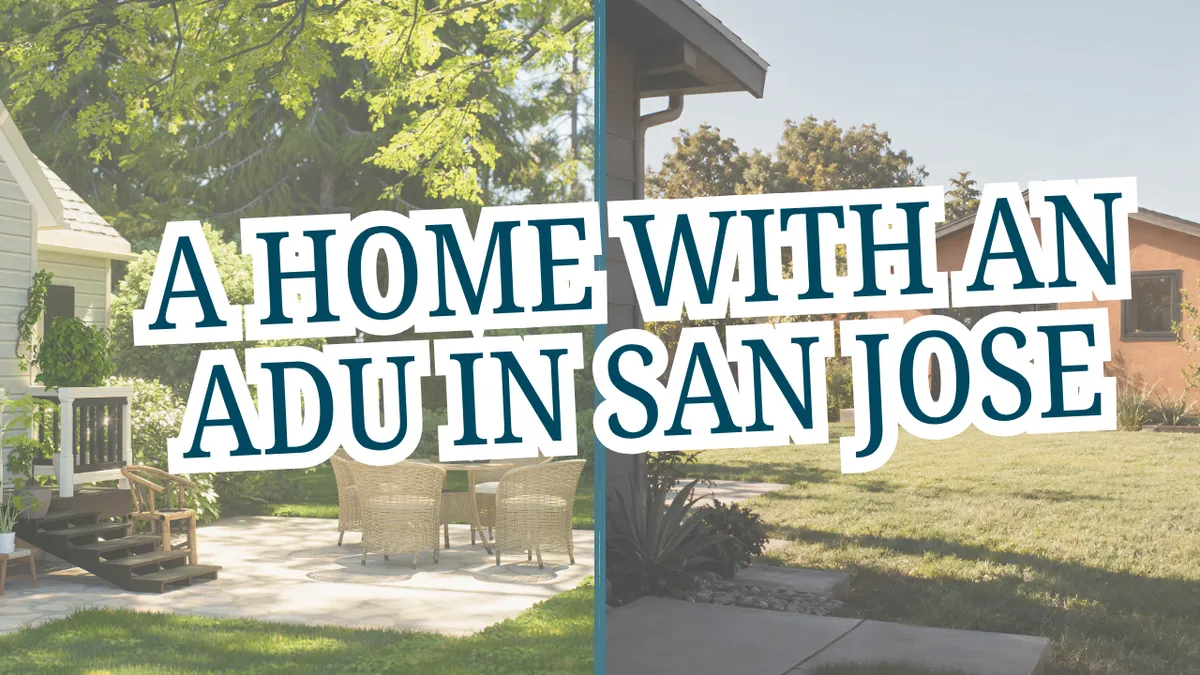
A Home With an ADU in San Jose
An accessory dwelling unit, often called an ADU, can make a San Jose home appealing to buyers who want extra living space. An ADU is a smaller residential unit on the same property as a main home. Depending on its design, it may be located in the backyard, attached to the house, or created from a converted garage.
Some buyers want an ADU for rental income. Others plan to use it for family members, guests, or a private workspace. While an ADU can provide flexibility, it is important to understand its legal status, condition, costs, and practical limitations before buying.
Is the ADU Legally Permitted?
One of the first things to check is whether the ADU was built with the required permits and approvals. Do not assume that a separate unit is legal simply because it has a kitchen, bathroom, and its own entrance.
Ask the seller for permit records, approved plans, and any available final inspection documents. You can also check with the appropriate City of San José department to learn what records are available for the property.
If the unit was created by converting a garage or adding rooms to the main house, confirm that the work was approved for its current use. A space that looks like an apartment may not meet the requirements for a legal dwelling.
If the records are incomplete or unclear, consider getting guidance from a qualified professional before moving forward. Unpermitted work may create safety concerns, limit how the space can be used, or lead to future costs.
Can You Use the ADU as a Rental?
If you hope to earn rental income, find out whether the ADU can legally be rented and what rules apply. Requirements may depend on the property's location, the unit's status, and current local regulations.
Ask the seller whether the ADU is currently rented. If it is, request relevant lease information and details about rent, deposits, utility arrangements, and any obligations that may continue after the sale. Review the documents carefully rather than assuming the existing arrangement will automatically transfer in the way you expect.
Do not base your purchase budget only on the rental income advertised by the seller. A unit may have periods without a tenant, and you may need to pay for repairs, maintenance, insurance, and utilities.
It is also wise to estimate realistic rent by comparing similar legal rental units in the area. A local real estate professional can help you understand the market, while a qualified tax or legal professional can explain other responsibilities associated with being a landlord.
What Condition Is the ADU In?
Just like the main house, an ADU needs to be evaluated before purchase. Check the visible condition of the roof, walls, floors, windows, plumbing, electrical fixtures, and other major components.
Look for signs of moisture, water damage, poor ventilation, or unusual odors. Pay attention to the bathroom and kitchen, since these areas have plumbing and fixtures that may require repairs.
Ask whether the ADU has been inspected recently and request records of repairs or upgrades. Depending on its age and condition, a separate inspection may be useful.
Do not assume that the main home's inspection covers every part of the ADU. Confirm what the inspector will review and whether additional evaluations are needed.
Are Utilities Separate?
Some ADUs have separate meters for electricity, gas, or water, while others share utilities with the main house. This can affect how easy it is to track expenses and divide bills between households.
Ask the seller how the utilities are set up and how current costs are handled. If the ADU is rented, find out whether tenants pay any utilities directly or whether those costs are included in the rent.
Shared utilities do not automatically make an ADU a poor investment, but they should be included in your budget. If you plan to change the utility setup, investigate the technical requirements and possible costs before assuming the change will be simple.
Will the ADU Provide Enough Privacy?
An ADU can create a useful separation between households, but the layout matters. Consider how close its windows, entrance, and outdoor areas are to the main house.
Visit the property and imagine how both spaces would be used at the same time. Could a tenant or family member enter without walking through the main home's private areas? Would noise travel between the units? Is there enough separation for outdoor activities?
Also consider parking, storage, and access to shared outdoor spaces. A property may have an ADU but still offer limited privacy if the two units are close together.
Think about your intended use. The needs of a relative living nearby may differ from those of a tenant or a guest who stays for a short period.
What Additional Costs Should You Expect?
Owning a home with an ADU may involve more expenses than maintaining a single residence. You may need to maintain two kitchens or bathrooms, service separate heating or cooling equipment, and address repairs in both living spaces.
Ask about the age of major appliances and systems. Review any available utility bills and maintenance records. If you plan to rent the unit, include periods without rental income and possible repair costs in your financial plan.
You should also confirm with your insurance provider how the ADU affects coverage. Do not assume your existing policy will automatically cover every use of the unit.
Final Thoughts
An ADU can offer flexibility, extra living space, and possible rental income when it is legal, well maintained, and suited to your plans. Before buying a San Jose home with an ADU, verify permits, understand rental rules, inspect the unit, review utility arrangements, and estimate the full cost of ownership.
If you are considering a home with an ADU in San Jose, Mariela Velazquez can help you compare properties and identify important questions to ask before making an offer.
Mariela Velazquez
Real Estate Expert in San Jose CA
Helping Home Buyers Move with Confidence
(408) 849-9297
https://www.move408.com/


